Motorcycle & Powersport News
Ducati Dealers Ranked Highest in 2014 Pied Piper Study
May 2014
Ducati dealerships returned to the top rank in the newly released 2014 Pied Piper Prospect Satisfaction Index® (PSI®) U.S. Motorcycle Industry Benchmarking Study. The last time Ducati dealerships were top-ranked was 2009. The study measured dealership treatment of motorcycle shoppers, with rankings by brand determined by the patent-pending Pied Piper PSI process, which ties “mystery shopping” measurement and scoring to industry sales success. ...
Read More >
» View PDF of Article (148.7 KB) 
Motorcycle.com
Ducati Dealers Top 2014 Prospective Shopper Satisfaction Study
May 2014
Ducati dealerships were rated the best in the U.S. motorcycle industry at how well they deal with potential new customers. The Italian manufacturer earned the highest score out of 17 major brands in the 2014 Pied Piper Prospect Satisfaction Index, the firs time Ducati topped the annual Index since 2009. The study was conducted by California-based Pied Piper Management Company which employed 1,885 anonymous “mystery shoppers” to visit different ...
Read More >
» View PDF of Article (716.8 KB)
Dealernews
Mystery shopper study: Dealers improve PSI scores over 2013
May 2014
MONTEREY, Calif. - Ducati dealers ranked tops among mystery shoppers for the first time since 2009, according to the 2014 Pied Piper Prospect Satisfaction Index (PSI) U.S. Motorcycle Industry Benchmarking Study. Industry-wide, dealers improved their prospect service scores "substantially" from 2013 to 2014, with 12 of 17 motorcycle brands achieving higher results than they did last year, researchers said. Dealer sales personnel mentioned the ...
Read More >
» View PDF of Article (424.3 KB)
Powersports Business
Ducati dealers top PSI for the first time since 2009
May 2014
Ducati dealerships returned to the top rank in the newly released 2014 Pied Piper Prospect Satisfaction Index (PSI) U.S. Motorcycle Industry Benchmarking Study. The last time Ducati dealerships were top-ranked was 2009. The study measured dealership treatment of motorcycle shoppers, with rankings by brand determined by the patent-pending Pied Piper PSI process, which ties “mystery shopping” measurement and scoring to industry sales success. ...
Read More >
» View PDF of Article (766.1 KB)
Ultimate Motorcycling
Ducati Dealers Top 2014 Pied Piper Satisfaction Study
May 2014
Two-thousand thirteen was Ducati's first full year under Audi AG ownership. And when the Borgo Panigale manufacturer released its yearly worldwide sales report, record numbers were reported. This was the second consecutive year Ducati Motor Holding posted record yearly-sales results, and CEO Claudio Domenicali attributed the results to the “strength of our products and the appreciation of the brand.” The latter part of that quote received some ...
Read More >
» View PDF of Article (1.44 MB)
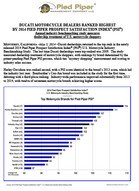
DUCATI MOTORCYCLE DEALERS RANKED HIGHEST BY 2014 PIED PIPER PSI(R)
May 2014
Monterey, California – May 5, 2014 –Ducati dealerships returned to the top rank in the newly released 2014 Pied Piper Prospect Satisfaction Index® (PSI®) U.S. Motorcycle Industry Benchmarking Study. The last time Ducati dealerships were top-ranked was 2009. The study measured dealership treatment of motorcycle shoppers, with rankings by brand determined by the patent-pending Pied Piper PSI process, which ties “mystery shopping” measurement ...
Read More >
» View PDF of Article (332.4 KB)
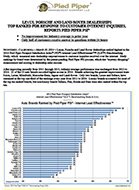
Press Release: LEXUS, PORSCHE AND LAND ROVER TOP RANKED FOR RESPONSE TO CUSTOMER INTERNET INQUIRIES
March 2014
• No improvement for industry-average vs prior year • Only half of customers receive answer to questions within 24 hours MONTEREY, CALIFORNIA – March 10, 2014 – Lexus, Porsche and Land Rover dealerships ranked highest in the 2014 Pied Piper Prospect Satisfaction Index® (PSI®) Internet Lead Effectiveness(™) (ILE™) Benchmarking Study, which measured auto dealership responsiveness to customer inquiries received over the internet. Study rankings ...
Read More >
» View PDF of Article (556.6 KB)
Powersports Business Blog
Emotion? Or just going through the motions?
December 2013
All major motorcycle manufacturers exhibited at the Long Beach Motorcycle Show this year, but while they all started with the same empty show floor, their displays were each very different. Similarly, each manufacturer was assigned the same amount of time — 15 minutes — for a press conference to share their message with gathered journalists, but the presentations were strikingly different. Some displays and presentations were full of energy and ...
Read More >
Washington Post
Study: Mercedes-Benz, Infiniti Dealerships Treat Shoppers Best
July 2013
Mercedes-Benz, Infiniti, and Lexus dealerships treat car shoppers the best, while at least some Scion and Mitsubishi dealerships have a lot to work on. These results are some of the top-level findings of the new 2013 Prospect Satisfaction Index (PSI), from the California sales and service consulting firm Pied Piper. This is the seventh consecutive year that Pied Piper has conducted the PSI studies, and for 2013 it's reset the industry-average ...
Read More >
The Car Connection
Study: Mercedes-Benz, Infiniti Dealerships Treat Shoppers Best
July 2013
Mercedes-Benz, Infiniti, and Lexus dealerships treat car shoppers the best, while at least some Scion and Mitsubishi dealerships have a lot to work on. These results are some of the top-level findings of the new 2013 Prospect Satisfaction Index (PSI), from the California sales and service consulting firm Pied Piper. This is the seventh consecutive year that Pied Piper has conducted the PSI studies, and for 2013 it's reset the industry-average ...
Read More >